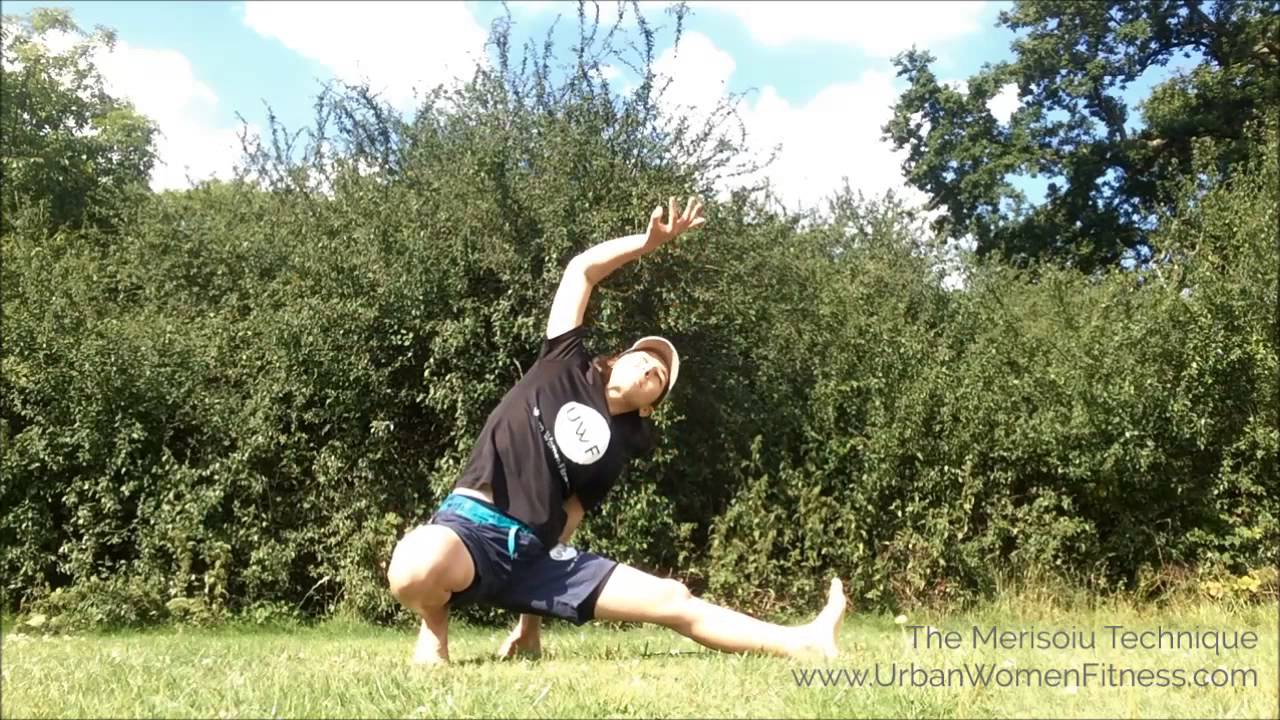
12 Ways To Bring Movement In Your Daily Routine

Today I was a guest on Ridge-Radio Tandridge (once the recording is up I will post it around for you to listen). Among the many topics we talked about was how to bring movement, exercise in your lifestyle.

This is especially effective for busy mums who wear multiple hats: mother, spouse, entrepreneur or busy corporate and many other roles. But no only, it’s for busy fathers as well.

We are meant to move and when we don’t use our muscles they de-condition. At the beginning it’s not visible, everything happens “under the hood”, but de-conditioning happens very fast.

We have evolved to use our bodies, like all other creatures on earth, and when we don’t use it enough it hurts, it’s stiff and weak.

Thus without further ado, here are some ideas:


1. Brushing your teeth

Small squats, small lunges or standing on one leg to work those stability muscles (make sure if you lose your balance you don’t fall on something and injure yourself.


2. Are you in a hurry?

Don’t take the car, walk faster, speed walk.


3. Cooking

Stretch out, squats, lunges or, why not, a few crunches.


4. Kids

Play with your kids, even if you feel tired. You will feel better after you move around a little, even if only for 5 minutes.


5. Your drink

Don’t ask your kids to bring you a glass of water or your spouse to make you a coffee. Get up and prepare it yourself.


6. Lifting

You don’t have you lift heavy stuff, but even light ones pick them up yourself. If you have any injuries make sure this will not make it worse.

Also, every time you need to pick up something do so by squatting, split squatting or lunging.


7. Ironing

Now this is a tricky one. Squatting, high to begin with, while ironing.


8. Bus or train stop

You can walk from one side of the platform to the other, you can stand up and sit on the bench (it will look weird but that’s ok), balance exercises, stretching, lunges. (I do all these!)


9. Groceries

Besides walking to and from the grocery shop, use the bags with groceries as weights. Like this:

  • use your core muscles to keep your body balance, not leaning one side or the other, forwards or backwards
  • lateral lifts, with straight arms (if you can’t you don’t need to lift all the way up in line with the shoulder)
  • bicep curls
  • forward lifts
  • torso twists (arms alongside the body and twist from the waist)
  • shoulder shrugs
  • you can also walk in small lunges if you are brave


10. Sitting

Do 5 squats before you sit or lie down, every time.


11. Chair

You can sometimes stand at your desk, or use a stability ball which will activate some of the core muscles.


12. Uphill

Choose the more difficult path. When you walk uphill keep your body straight and aligned, don’t lean or bent forwards.


See what you can do from these suggestions.

Come up with some ideas and leave a comment and I will write a part 2 to this article quoting your idea. If I haven’t replied within a couple of days I might not have seen it, so contact me to let me know please (through social media or message me on the website).

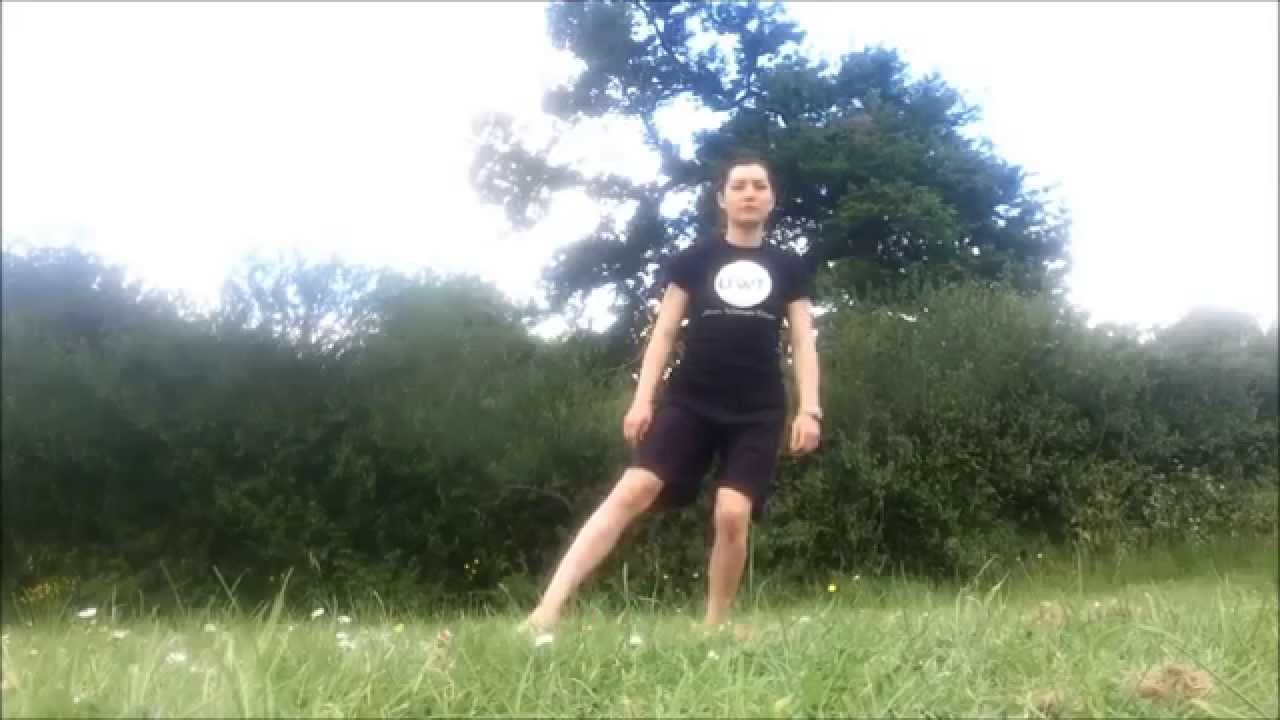
3 Exercises For Hip Mobility And Stability For Runners

A strong and stable hip joint reduces the risk of injury in your pelvic joints, spine and knees. It also promotes a good posture, as there is no limitation in the hips flexors area (above the thighs, the muscles which help you bring your knee up, that’s hips flexion) and you develop a stronger core and stability muscles.

For runners, and not only, strong stability muscles, a stable hip joints, strong glutes maximus and hips flexibility and mobility can save a lot of injuries, help recover faster from injuries, and help perform better.

By strengthening muscles around the hips joints, which also stabilize the joint, you can relieve lower back pain as well.


Alignment

All exercises must be performed with correct alignment. If you lost technique and perform them with poor alignment then it’s for nothing. Dozens of repetitions are useless if they are not performed correctly.

Running is more than just placing one foot in from of the other. Running with good alignment, and a stable, mobile and flexible hip joint is the key to performance, speed or endurance, and less injuries.


1. Bridges

Lie down on your back.

Soles of your feet, hip width appart, flat on the ground and knees bent.

Keep heels as close to your buttocks as possible.

Lift your hips off the floor – using the buttocks.

This exercise activates your buttocks and hip stabilizers in your hip joints. It will reduce some of the back stiffness and lower back pain, and also improve your posture.


2. Squats

Particularly full or deep squats. These are excellent to strengthen your buttocks, and all stabilizer muscles from your feet all the way up to your core. It is a natural movement and should be practiced every day.

I have already written an article on Deep Squats – Benefits And Technique, it’s more detailed.


3. Balancing exercises 

Balancing exercises are again exercises which should be performed daily. They strengthen all stability muscles from the soles of the feet to the core.

Balancing exercises do not stop at just standing on one leg. Not at all. Try variations such as:

  • standing on one leg and placing a pencil on the floor, then picking it up ( the SeeSaw)
  • making a big circle around your body as far as possible, close to the ground but without touching (360 Degrees) – see video below
  • imagine you are the center of a clock, stand on one leg and touch with the other leg (with the toes only) each number around the clock (without putting any weight on the leg that reaches out)
YouTube placeholder image
Accept marketing cookies to load content

Get creative but do take care where you balance. Even if you have very good balance, in case you do lose balance make sure you will not fall and hurt ourself. Safety first.


These exercises and more are some of the balance exercises we practice on out Natural Human Movement coaching. They are also part of the online Academy – a 12 weeks, weekly training and planning on Natural Human Movement, with videos, audios and detailed technique descriptions.

If you want to know more about The Academy contact me.

If you’d like to experience the outdoors Natural Human Movements training, we have FREE taster sessions taking place in Surrey. Message me and let’s book you on a taster session. Click here to message me.

Deep Squats – Benefits And Technique

Before chairs came along humans used to squat. In some cultures, such as Indian, they still squat, that’s the natural way for them. In fact that is the natural way for humans, regardless of their culture. We all come from the same source, then we use labels. But that’s just the surface, we all come from the same place, the same source.

What is natural for one is natural for everyone. However, if we stop moving in a certain way the body, the muscles, are not adapted anymore, they “forget” but when they do go back to the natural state if feels amazing.

Squatting is probably the most primitive movement. And, as I always say, your body was designed to move. That is why you have joints, tendons, ligaments. Your skeletal system was designed to be used, and when you don’t it weakens.

Have you ever noticed the fetal position? You were squatting before you were even born!


Benefits of deep squat:

  1. joint strength – ankles, knees, hips
  2. muscle strength – particularly important are the glutes which are stabilizers for the lower back as well as strengthening the hamstrings, thus less risk of lower back pain
  3. core strength
  4. bone health – bone density is affected by the pressure you put on your skeletal system
  5. healthy bowel movement
  6. healthy nerve functioning
  7. improved flexibility and mobility – we all know how we feel then our body is stiff, and as we age, mobility is even more important
  8. reduce risk of injuries – as your body gets stronger and more mobile and flexible
  9. posture – you learn a lot about posture when you learn to squat; you also learn about how to use your muscles in correct sequence


Squatting with weights

When you squat with weights stop at a 90 degrees angle at the knee, or stop when thighs are parallel to the ground.

There are many benefits of deep squatting. But the deep squat is, or should be, part of a series of exercises done on a regular basis. That does not mean every day, although squatting everyday can make a huge difference to your mobility, strength and overall fitness.

So here’s the deep or full squat technique as part of our Wild Workout free exercises.  Click here and find the exercise, it’s free.

Exercises For A Strong body

This article builds up on one of my other articles related to muscle isolation, why not to isolate. 

I gave you the reasons why not to isolate and now I will give you some example of exercises to do, with videos and instructions.

I like exercises which work the whole body. Some of them emphasize a certain area more than others but then we balance it out with other exercises.

I also like exercises which challenge mobility and flexibility. Because to be ready for anything your body has to strong and flexible in the same time. Not excessively flexible, that’s not good either. There is a balance.

Your body is as strong as your weakest link, thus we have to think not only about the obvious muscles, such as thighs and biceps, but also about:

Foot muscles – balance exercises, very simple; get creative and think safety first

YouTube placeholder image
Accept marketing cookies to load content

Glutes (butt muscles)– they are stabilizer muscles; strong butt muscles are important for hip stability and preventing lower back pain; practice squats

YouTube placeholder image
Accept marketing cookies to load content


Can’t go all the way down? Place a book under your heels (a stick or stand on an incline with toes facing downhill) and practice until it gets easier. Then change it with a thinner book and so on until you do them all the way on flat ground.

Core – it’s called a core for a reason, that is where everything comes from (even hiccups); practice crawls (or alternative locomotion); they strengthen the core without compromising posture, straining next muscles and lower back and they are fun as well. Here’s the basic one to start with: The Panther Crawl

Upper body – lifting, carrying, throwing, catching, they are day to day movements; your body needs to be strong, in its natural, healthy and balanced state. Use a bar for this exercise (skip the balance part, just do the leg lifts). This exercise will work the core as well.

YouTube placeholder image
Accept marketing cookies to load content

Flexibility and mobility – you have to have both; without mobility strength is useless; imagine slipping on ice and having no mobility or flexibility, your body will not be able to respond.

YouTube placeholder image
Accept marketing cookies to load content


If you avoid isolation and practice complex movement such as crawling, running, jumping, squatting etc you develop the body as a whole. Isolate and you will probably miss the smaller stability muscles.