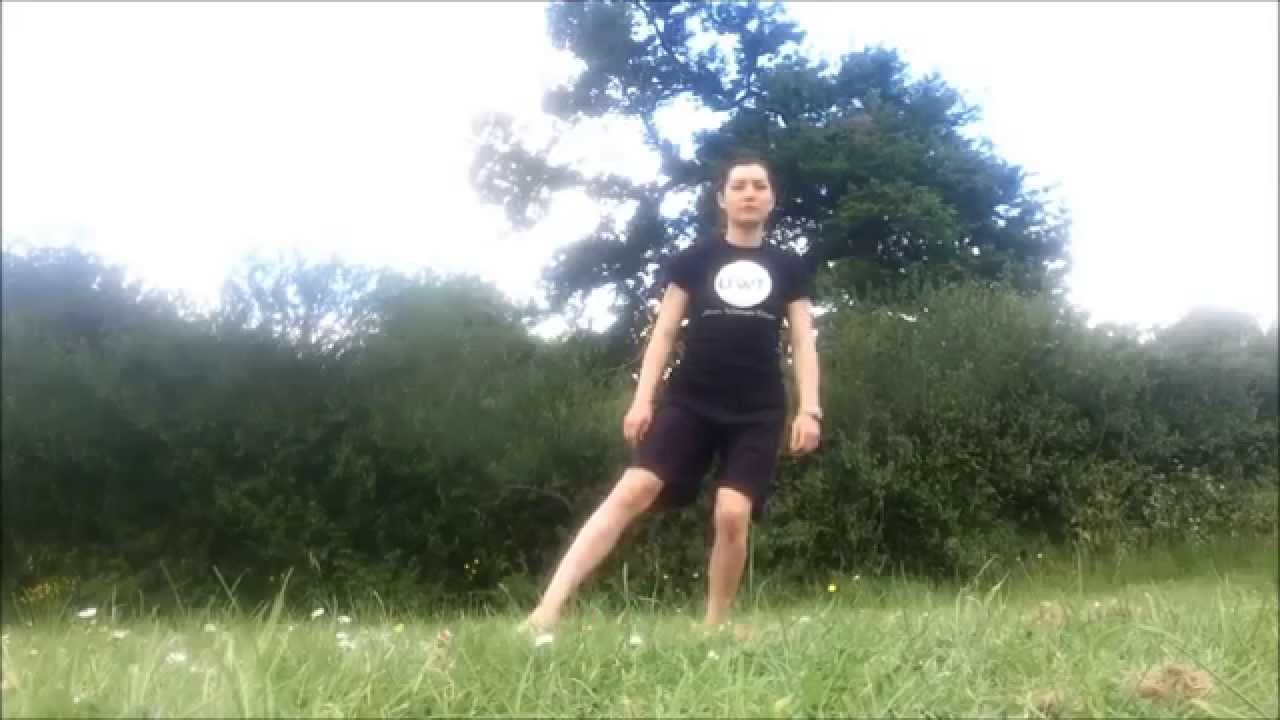
Running Technique – Shoulder Pain And How To Solve It

One of the most common habits runners have is the tensing and lifting of the shoulders, which includes the deltoids, trapezius, romboids, simply put it’s your shoulders and shoulder blades. The idea is to relax and release the tension in the area. I explain more in this video. This will also help you minimize running injuries related to shoulders, down the road.

YouTube placeholder image
Accept marketing cookies to load content

Factors Leading To Running Injuries – Flexibility And Mobility

When you run your muscles contact and expand. Hundreds of times, maybe even thousands for long distance runners.  Tight muscles and joints can lead to all sorts of injuries including knee pain, lower back pain, plantar fasciitis, muscle cramps.


Working on your flexibility and mobility as a runner means you will:

– run faster

– run for longer

– recover faster

– reduce the risk of injuries – including muscle cramps, pulled muscles, lower back pain, plantar fasciitis

– improve blood circulation


Furthermore the focus of you stretch and mobility exercises should be not only on lower body but also hips, AND upper body. Why? Because firstly running in a full body movement, second notice how your body moves in diagonal – left leg with right arm, right leg with left arm – there is a rotation in the body every time you step. Third, upper body muscles have to contract and expand just like the lower body, otherwise that rotation wouldn’t take place, it would be very uncomfortable, tight, and at risk on injury.


Are 10 min of stretching at the beginning and end of your run enough?

Not really. I mean come on, do you think that after running 5 km 10 min of quick stretches will release the muscles and joints? If you help every stretch for 10-15 sec, and you stretched your whole body, 10 min wouldn’t be enough.

Instead consider:

– having 2 shorter running sessions per week that begin with 10 min stretches and end with a 30 min stretch – full body

– signing up for a weekly yoga and/or pilates class

– natural movement fitness (the kind that we do here at The Merisoiu Technique Institute)


Remember, the whole body needs to be flexible, mobile and strong for a runner to be complete.


For coaching or advice email support@themtechnique.com or book a consultation

Want to know when the next running technique workshop takes place leave your details below and you will receive the updates.

← Back

Thank you for your response. ✨

Interested in a FREE consultation?(required)


Factors Leading To Running Injuries – Transition Speed

You are a long distance runner, but want to switch to interval training to get faster. I get you, it’s normal and a natural progression.

Do read the short article on Change to begin with, then come back to this one.


When you want to change your training regime, to transition from endurance to speed, you must remember:

1. Your nervous system dictates how long the transition will take. Force it and you may end up injured.

2. Your slow twitch muscles fibers – needed for endurance – are more developed while the fast twitch muscle fibers – needed for fast, explosive movements – are less developed. Give them time to develop. You can’t hurry the adaptation process.

3. Think of this new training regime as if you were starting from zero, as if you were a beginner – thus begin with easy exercises, practice a beginners routine 6-8 weeks and then go to the next routine, more difficult, more challenging.


For coaching or advice email support@themtechnique.com or book a consultation

Want to know when the next running technique workshop takes place leave your details below and you will receive the updates.

← Back

Thank you for your response. ✨

Interested in a FREE consultation?(required)


Factors Leading To Running Injuries – Posture And Body Alignment

Factors-Leading-To-Running-Injuries-Alignment

If posture is essential to prevent lower back pain and sore shoulders, why is it an element runners seldom, if ever, think about? We, runners, all know it’s important, but we just know, it’s there, it’s important….and that’s about all the attention posture gets, from many runners.

Posture is THE first element you need to look at in all areas of your life, not least your running technique.

Well aligned runners will have fewer injuries. Why? Because your body is meant to be aligned, to move in alignment, it will always seek alignment. When we don’t give what it needs then things go downhill. Slow, it may take a few years, but we get there.

Furthermore your alignment throughout your regular daily activities will impact your running alignment. You can’t have a poor posture 90% of the time, and expect to have a good posture when you run. Sure, it’s alright to forget your posture sometimes, we all do, but not most of the time.

Poor posture and alignment in running can (and does) lead to:

– lower back pain
– knee damage
– ankle injuries – a poor posture does put a lot pressure on the feet and ankles, they are your base of support afterall
– foot injuries
– sore shoulders
– shoulder and neck injuries
– tight neck and shoulder muscles
– reduced flexibility and  mobility – in legs and trunk as well – which can lead to pulled muscles

These are only some of the effects of incorrect body alignment and posture. Other include other area of your health such as digestion (yes, poor posture – poor digestion).

What is the correct alignment for running you ask? According to POSE Method Of Running there should be a straight line ear – shoulder – hip – ball of foot (which is the support and point of contact with the ground; ball of food is not toes or heel).

Alexander Technique is similar, with the only difference the straight line end just in front of the ankle. Since in Alexander Technique we look at standing and walking, alignment is a littler bit different, ever so slightly.

I will write another article on the topic.

Need coaching? Email support@themtechnique.com of click here to book a consultation.

Want to know when the next running technique workshop will take place leave your details below and you will receive the updates.

← Back

Thank you for your response. ✨

Interested in a FREE consultation?(required)


Factors Leading To Running Injuries – Change

Does running regularly mean you will end up having to pay physios for life? No, not necessarily. Although, like with virtually any sport, even swimming if you swim often and aim high, you will suffer some injuries. How bad, how often and for how long, now these are variables that can be changed.

Change is one of the causes of sport related injuries. And when we talk about running injuries we refer to:

– foot injuries – including plantar fasciitis
– ankle injuries
– shin splints
– knee injuries
– hip injuries
– lower back pain

These are very common injuries and pains in runners who run regularly and push themselves to make progress.

Change is one of the elements that can cause there types of running injuries. Change in terms of:

– speed
– distance
– running frequency, but also
– different shoes (watch out minimalist/barefoot runners when transitioning to minimalist shoes), and different technique
– training type – i.e. from endurance training to interval training

No matter how much you try to progress fast, you are directed by your NERVOUS SYSTM. Until the nervous system adapts to the change, any attempt to push beyond it’s adaptation time frame can lead to injuries.

Thus, my advice on any changes you wish to make:
– make change slow
– have patience
– make the correct changes
– make the changes correct
– get a coach to direct you so you do things the right way, especially if you are a beginner

Need coaching? Email support@themtechnique.com or click here to book a free consultation.

Want to know when the next running technique workshop takes place? Leave your details below and you will receive the updates.

← Back

Thank you for your response. ✨

Interested in a FREE consultation?(required)


Ion8 Water Bottle – Versatile And Leakproof

There is so much to say about this little water bottle, Ion8. Over the past 6 months or so I’ve been using it for many different drinks:

  • water
  • hot tea
  • lemonade – homemade, sqeezed lemon (or lime), with honey and mint leaves
  • chia seeds drink – water, honey, chia seeds and lime
  • orange and grapefruit juice homemade with pulp


I used it for running, cycling, karate training, karate competitions, even at business meetings. It pretty much fits in any environment I find.


Easy to wash

The reason I could have juice with pulp is because the nozzle can be washed! This is one of the features I love most. The pulp, or honey, will not stick inside the nozzle. You can actually wash it away!


Leak proof

Along with the ease of washing the Ion8 water bottle is also leak proof with its lid lock system. I’ve had it in my back pack in all possible positions, inclduing upside down. And after 6 months of using it daily it’s still perfectly leak proof.

ion8-water-bottle-merisoiu-technique-institute-review1


No more dirt

I used to get the nozzle full of dirt with the regular water bottles, because the nozzle was not covered. So I would eat dirt and wash it down with water. Ion8 water bottle fixed that for me with it’s lid that protects the nozzle from dirt and touching it with dirty hands.


Hot drinks

Another awesome thing about the Ion8 bottle is that you can take hot drink with you, up to 90 degrees celsius. When we train outdoors in winter having a hot drink in your backpack is such comfort. No more separate thermos bottles. Although it may not keep it hot as a thermos would, at 90 degrees, it keeps it rather warm throughout 1-2 hours session. So I’m perfectly happy with that.


Just tilt

No more sqeezing the bottle until something comes out of it. With the Ion8 water bottle is enough to just tilt and pour.


One hand

The lid opens with one hand (tested) and locks close. I found that very useful when cycling.

ion8-water-bottle-merisoiu-technique-institute-review2

BPA free

Finally, the Ion8 water bottle is BPA free, phthalate free, non-toxic TRITAN is dishwasher safe.


Soon we will have Ion8 water bottles with The Merisoiu Technique brand, so stay posted. If you can’t wait have a look at their website.

If you want an Ion8 water bottle with The Merisoiu Technique fill in the form below and we will get back to you when they’re ready:

← Back

Thank you for your response. ✨


Transitioning To Barefoot Running – What You Need

Transitioning-To-Barefoot-Running-What-You-Need

Barefoot running or minimalist running is not something new. It’s new for us in this modern age, after we stepped into our amazing modern world. However, we must understand that we have inherited a stone age body, and have placed it in a modern environment (Daniel Lieberman – The Story Of The Human Body). Thus, many of the aches, pains and some of the diseases we suffer from today come from this discrepancy between what our body needs and what our brain gives it.

When I transitioned to barefoot running or minimalist running (this means running in minimalist shoes, for those who are not familiar with the term), I was coached by Obstacle Course Race Coach Michael Cohen. And how lucky I felt and feel learning such skills from a coach like him.

Throughout coaching and then my own exploration of bare foot running I reached the following conclusions about what a runner needs to safely transition to bare foot of minimalist running:


1. Running technique

You might be an amazing running, a very experienced one, but going from normal running shoes to barefoot or minimalist running is a great leap. It’s a great leap for your body from a mechanical point.

When wearing shoes some muscles grow weaker, as they are not challenged. For example with bare foot running the foot muscles, knee muscles, calves, core, glutes (buttocks) are some of the muscles which are more challenged when running barefoot or with minimalist shoes.

Thus, you must ensure you practice correct running technique, go slow and have patience.

I wrote articles on running technique leave a comment below and I will send it to you.


2. Patience

No matter how much you wish to hurry the process, your muscles, tendons, ligaments and skeletal system will gradually adapt to support each other, as each develops.

Force your body at the wrong time and you risk long term injuries.

Even if you are a marathon runner you must start with 5-10 min slow running barefoot or in minimalist shoes, and build from there.


3. Coaching

Yes, I do believe that if you want to achieve something at a good level coaching is necessary? Why? How can you see the frame if you are in the frame?

You can’t, there has to be someone outside to see your technique and correct you. To make you aware of what’s happening. What might seem correct to you might be incorrect.


In conclusion here are a few points to remember when transitioning to barefoot or minimalist running:

  1. Start slow: wear the shoes in the house, then walking outdoors, then running 5 min, 10 and so on
  2. Build gradually
  3. Understand the basics of running technique such as malingered body and short strides (there are more elements)
  4. Transitioning can take anywhere from 3-6 months to 12 months, depending on how your body adapts and responds to training
  5. Get a coach, to ensure you are doing it right from the beginning; correct movements that are already ingrained in you will be much more difficult


That’s all folks. If you have questions do book a free consultation with me and I will do my best to help you on the spot. Book here

3 Exercises For Hip Mobility And Stability For Runners

A strong and stable hip joint reduces the risk of injury in your pelvic joints, spine and knees. It also promotes a good posture, as there is no limitation in the hips flexors area (above the thighs, the muscles which help you bring your knee up, that’s hips flexion) and you develop a stronger core and stability muscles.

For runners, and not only, strong stability muscles, a stable hip joints, strong glutes maximus and hips flexibility and mobility can save a lot of injuries, help recover faster from injuries, and help perform better.

By strengthening muscles around the hips joints, which also stabilize the joint, you can relieve lower back pain as well.


Alignment

All exercises must be performed with correct alignment. If you lost technique and perform them with poor alignment then it’s for nothing. Dozens of repetitions are useless if they are not performed correctly.

Running is more than just placing one foot in from of the other. Running with good alignment, and a stable, mobile and flexible hip joint is the key to performance, speed or endurance, and less injuries.


1. Bridges

Lie down on your back.

Soles of your feet, hip width appart, flat on the ground and knees bent.

Keep heels as close to your buttocks as possible.

Lift your hips off the floor – using the buttocks.

This exercise activates your buttocks and hip stabilizers in your hip joints. It will reduce some of the back stiffness and lower back pain, and also improve your posture.


2. Squats

Particularly full or deep squats. These are excellent to strengthen your buttocks, and all stabilizer muscles from your feet all the way up to your core. It is a natural movement and should be practiced every day.

I have already written an article on Deep Squats – Benefits And Technique, it’s more detailed.


3. Balancing exercises 

Balancing exercises are again exercises which should be performed daily. They strengthen all stability muscles from the soles of the feet to the core.

Balancing exercises do not stop at just standing on one leg. Not at all. Try variations such as:

  • standing on one leg and placing a pencil on the floor, then picking it up ( the SeeSaw)
  • making a big circle around your body as far as possible, close to the ground but without touching (360 Degrees) – see video below
  • imagine you are the center of a clock, stand on one leg and touch with the other leg (with the toes only) each number around the clock (without putting any weight on the leg that reaches out)
YouTube placeholder image
Accept marketing cookies to load content

Get creative but do take care where you balance. Even if you have very good balance, in case you do lose balance make sure you will not fall and hurt ourself. Safety first.


These exercises and more are some of the balance exercises we practice on out Natural Human Movement coaching. They are also part of the online Academy – a 12 weeks, weekly training and planning on Natural Human Movement, with videos, audios and detailed technique descriptions.

If you want to know more about The Academy contact me.

If you’d like to experience the outdoors Natural Human Movements training, we have FREE taster sessions taking place in Surrey. Message me and let’s book you on a taster session. Click here to message me.

The Motivation Jars

I met Ruth through Obstacle Racing in 2014. She has a job, family, kids, like many of us do. And surely enough life gets in her way too. Yet she has found a way to fit Obstacle Racing, Cross Fit, Running and more in her life. She has kindly agreed to write about the “motivation jars”, which I thought is an interesting way to get those 2-3 weekly runs done. 


My story to become a runner

Throughout 2015 I wanted to become a runner, same as the year before.  At the end of the year I looked through my Nike + app to find that I had logged the huge number of 44 runs in 2015, that wasn’t all runs thankfully, but for someone wanting to be a runner its pitiful.

I’ve always wanted to run a reasonable 5k time, and for me under 40 mins would be reasonable, my closest being 40:19 in 2014.

Not saying I can’t run, I can run-walk for miles, and think nothing of signing up for obstacle course races of any distance, including a half marathon distance.  But if you ask me to run a half marathon I will refuse as I can’t run that far.  Silly, I know, but no-one cares if you walk an obstacle course race from start to finish, and that does tend to be my default pace in such a race.

The other thing about running is that I know my body responds well to it in terms of weight control, which as a lady of advancing years I struggle with it year on year.

I’ve seen challenges to run 365 miles a year, I failed when I tried. Others where you pay yourself money for every run, but that doesn’t motivate me either.

Challenges aren’t a bad thing for me, but they are often daily things I fail as my life can be a bit erratic.

You see, I am normal, I have a house, four cats and a husband that sometime works away.  I have a full time job, in which I run a 5 person team that is critical to business functions, and if there is any issue/holiday/sickness that need additional support then that falls on my shoulders as well as my normal stuff.  So yes life gets in the way, sometimes. It does for everyone.


The challenge

So if I am going to set a challenge or goal it has to follow some basic rules

  1. Be achievable
  2. Be realistic


A friend of mine ran every day during December, setting a minimum distance of 1 mile.

Could I do that during January?  No, whilst it is achievable, going out the door for a minimum of 1 mile is very doable, but every day????  I have no idea what January is going to bring me at work, and I am not a runner.  Plus running is not my only exercise, I do Crossfit and sometimes the DOMS from that means that walking can be a challenge in itself, so saying I will run every single day is not going to happen.

But I wanted something for 2016.  At Christmas I got myself a Vivosmart HR so that I can track my heart rate and steps done each day, and I can also track runs easily.  Nike + relies on my entering the details in after the fact a lot of the time.


The Motivation Jars

I saw an idea on a group of American women, two jars, one with beads in, one empty.  You set something you want, and if you do it then a bead moves from the full jar to the empty one.   Now that sounds a plan.

Dec 31st shopping trip and I bought myself a bag of glass pebbles, the type used in flower decorating, for the bottom of vases.  In the bag are 120 beads.

I knew I had two suitable jars at home already. One I labelled ‘To Do’ and one ‘Done’.

motivation-jars

So how to fit 120 beads into a challenge that follows the rules.

  • 31 would be for January – but I’ve already failed in my head at that one.
  • 120 is 3 months – if I can’t do a single month then 3 is no chance
  • 120 is 10 x 12 – ooooohhhh!!! Now that’s sounds interesting


So here is my challenge

  • A run is anytime I go out the door and run/amble over 2km (my watch is better in metric)
  • Any Crossfit WOD which includes running totalling over 3km counts as a run.
  • Every run, moves a bead from the ‘To do’ jar to the ‘Done’ jar
  • Any race is also moves a bead, regardless of the distance.
  • Also to the ‘Done’ jar I will add little post-it notes with milestones/quotes/bits of interest on them, then at the end of the year they will be nice little reminders to read back and see what I have achieved.
  • First post-it note – my weight at 1st Even if that doesn’t change, the runs and the other achievements will show me how far I have come.


It works out as 10 runs a month, or 2 runs a week with the odd additional run thrown in for good measure.

That is both achievable and realistic, and to ensure maximum benefit to my well-being then the treadmill does not count, all runs are to be outdoors.


About Ruth

ruth

At 48 I work as an assistant accountant for a multi-million pound manufacturing company.

Through my life I have done some great things, including going to university to study environmental forensics at 37, getting a Masters in Water Pollution whilst working, and scuba diving some of the most amazing sites in Europe.  I’m a cancer survivor and have a family history of heart disease, which I try to keep at bay with mindful choices.

Notable personal sporting achievements representing the country at 47 in the OCR World Championships, taking part in a 24hr running race and toeing the line at an Ironman.

I am an active contributor to the UK Mudd Queens, an online female group based around support and encouragement, I am also blessed with a supportive husband who also strives to be healthy and fit, so when I want to do things there is an automatic support system.

Current desires are to keep healthy, enjoy running, have another go at a 24 hr race and do better, get my weight and hormone responses under control.

And most of all to live and enjoy life.

How To Wake Up For An Early Morning Run

Throughout University and Masters studies I used to wake up at 5-5:30 am for my runs. When I got a job I did the same. Once you get into a routine is difficult to get out of it, whether that routines is to sleep in or jump out of bed, put the kit on and get out the door.

If you find it difficult to get up in the morning but you would like to, remember it’s about building momentum and then it gets easier to wake up early in the morning for your workout or run.

Now that I have my own business my running times are different. Sometimes I have clients from 7 am so I don’t do my own run as well, other time I do them. I don’t need to wake up very early. However, between 2012-2014, I used to wake up at 4:30 am to go training with my coach. I still have early morning runs though, they are the best.

The truth is that if you really want to do something you will, no matter how difficult you find it. Then you build momentum and it gets easier.


Here are a few of my tips and tricks to wake yourself up in the morning and get out that door:

  • have your kit ready, even the shoes, next to your bed – if you have to look for your shorts at 5 am chances are you will just go back to bed, wake up and put the kit on
  • have you water and bar ready – have them ready the evening before, next to your kit
  • alarm – if you are a heavy sleeper, have an alarm that could wake the neighbors, not one that will put you back to sleep
  • far far away – if you can, put your alarm far from your bed so you have to get up to turn it off
  • move – if you find it difficult to wake/get up, start jumping around, do 5 press ups, anything to get your body moving and wake you up, you don’t need to do a full workout, just to move – it works wonders
  • the evening before – it would be best to prepare your work clothes and bag before you go to sleep so you don’t feel under pressure in the morning, sometimes this can put us off running
  • weather – know the weather the evening before so you know what to prepare for


To have a quality sleep the most important advice I can give you is to avoid stimulating your brain 1-2 hrs before going to bed. No tv, computer, social media, phone movies etc, your quality of sleep will significantly improve just by avoiding this.